Ahmedabad University has announced the launch of The Ahmedabad MBA, a new management programme designed to respond to structural shifts reshaping business and society. The programme has been developed in recognition of the profound disruptions caused by rapid technological transformation, shifting geopolitical dynamics, climate change, and large-scale urbanisation, particularly in emerging economies such as India.
 |
The Ahmedabad MBA: Built for High Impact Roles in a Connected World
Over the past decade, businesses across industries have been challenged by new organisational forms, digital platforms, and data-driven operating models. Traditional structures built around hierarchies and incremental change are increasingly giving way to agile, cross-functional systems that require new skills and new ways of thinking. Roles within organisations are evolving rapidly, demanding technological fluency, interdisciplinary understanding, and the ability to navigate uncertainty.
Professor Pankaj Chandra, Vice Chancellor of Ahmedabad University, said, “Business today operates in an environment defined by complexity and interconnectedness. Technology is transforming how organisations function, geopolitics is influencing supply chains and capital flows, climate change is shaping regulatory and strategic decisions, and urbanisation is redefining markets and consumers. Management education must respond to these realities with intellectual depth and structural innovation.”
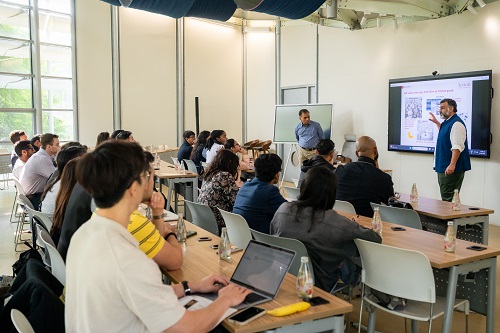
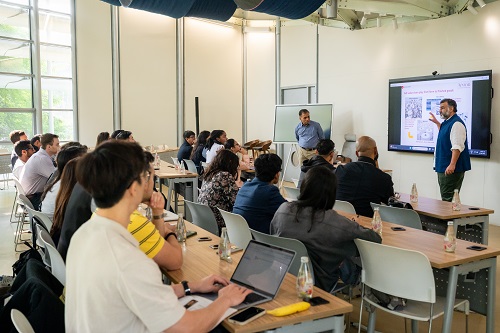
The Ahmedabad MBA has been designed within a comprehensive research university environment, enabling students to draw upon expertise across management, engineering, arts and sciences, public health, and technology domains. This interdisciplinary foundation reflects the growing need for managers who can integrate perspectives from economics, social sciences, computing, sustainability, and policy into business decision-making.
The programme is structured around four core capabilities. It emphasises the development of an entrepreneurial mindset that enables students to identify opportunity within uncertainty. It builds technological fluency so that graduates understand not only digital tools but also the strategic implications of emerging technologies. It integrates interdisciplinary learning to deepen understanding of markets, institutions, and society. It also cultivates the ability to work in diverse teams, recognising that contemporary problem-solving requires collaboration across varied backgrounds and expertise.
Students in The Ahmedabad MBA have the flexibility to shape their academic pathways in line with the roles they aspire to pursue. A student who wishes to become a technology product manager can complement marketing courses with coursework and projects in artificial intelligence, networking, and design from the School of Engineering and Applied Science. Those aiming to work in the health industry can integrate their management learning with courses in One Health and Data Science in Health from the Bagchi School of Public Health. A student interested in finance within the creative industries may combine business education with coursework in Performing and Visual Arts from the School of Arts and Sciences or pursue specialised study at the GIFT International FinTech Institute established by Ahmedabad University with IIT Gandhinagar. Similarly, a student aspiring to be a Sustainability Manager in a global manufacturing firm can undertake courses and projects with The Climate Institute to design sustainable systems, processes, and materials.
Field projects form a key component of the programme, enabling students to integrate classroom learning with real-world challenges. This experiential emphasis aims to ensure that graduates are prepared not only to analyse complex problems but also to design and implement practical solutions.
Career preparation is supported by a highly networked Career Development Centre that works closely with industry, startups, family businesses, and research-driven organisations. Graduates of the Ahmedabad MBA pursue careers across core functional areas such as finance, marketing, operations, and product management, as well as interdisciplinary and emerging domains including fintech, analytics, entrepreneurship, sustainability, advanced manufacturing, and the creative industries. The programme is designed to support diverse career ambitions aligned with both India’s growth and the realities of the global economy.
Ahmedabad University believes that the future of management education lies within strong university ecosystems that encourage dialogue across disciplines. Globally, many highly regarded business schools are embedded within comprehensive universities for precisely this reason. Such environments allow management students to engage with scholars in sociology, psychology, engineering, climate science, and public policy, thereby deepening the intellectual foundations of business practice.
“The manager of the future must understand systems rather than silos,” Professor Chandra added. “They must be comfortable navigating technological change, regulatory uncertainty, global interdependence, and social responsibility. The Ahmedabad MBA seeks to prepare such whole managers who can think critically, act responsibly, and lead in conditions of change.”
Admissions to The Ahmedabad MBA are now open.
About Ahmedabad University
Ahmedabad University is a leading private, non-profit research university offering students a liberal education focused on interdisciplinary learning, practice orientation, and research thinking.
The University has been
-
Recognised by the Government of Gujarat as a Centre of Excellence.
-
Accredited with ‘A’ grade by the National Assessment and Accreditation Council (NAAC).
-
Awarded Leadership and Management Team of the Year at the Times Higher Education Awards Asia 2025.
-
Awarded a 5-star rating, the highest awarded in the Gujarat State Institutional Rating Framework (GSIRF) for 2021-22 and 2023-24, by the Knowledge Consortium of Gujarat (KCG), Department of Education, Government of Gujarat.
-
Awarded the Royal Institute of British Architects (RIBA) International Award for Excellence 2024 for our University Centre.
-
Awarded a ‘Platinum Rating’ by the Indian Green Building Council for sustainability and green practices.
-
Recognised by the UGC under Section 12(B) of the UGC Act, becoming one of the very few private research universities to have been awarded this recognition for select research universities.
-
Recognised as a Highly Commended University for Teaching and Learning Strategy of the Year in the Times Higher Education (THE) Awards Asia 2023.
-
Awarded the AACSB’s Innovations That Inspire Award 2023 for its Foundation Programme.
-
Awarded Gold Rating by the Indian Green Building Council for achieving the Green Building Standards at our University Centre.
The University, established in 2009, is rooted in the vision of one of India’s finest educational foundations, the Ahmedabad Education Society, which was founded in 1935 by nationalist leaders. Programmes at the University range from bachelors to doctoral levels in humanities and social sciences, natural sciences, engineering, and management through its 14 Schools and Centres:
Amrut Mody School of Management | Bagchi School of Public Health | School of Arts and Sciences | School of Engineering and Applied Science | Ahmedabad Design Lab | Centre for Heritage Management | Centre for Learning Futures | Global Centre for Environment and Energy | International Centre for Space and Cosmology | Sahyog: Centre for Promoting Health | Stepwell Centre for Asian Futures | The Climate Institute | The Institute of Manufacturing and Economy | VentureStudio
An urban university, Ahmedabad promotes independent-mindedness and diversity across all dimensions of its activity and helps students mature into critical thinkers who are analytically equipped, practically oriented, and contextually aware global citizens. The University provides a contemporary educational framework that brings liberal arts, sciences, and the professions to engage together in creating new knowledge for addressing complex challenges of the society and in offering majors that merge the boundaries of disciplines to prepare students for the new economy.