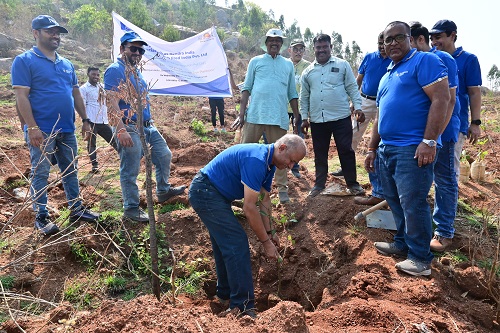
On three acres of land in Hanumanthapura village along Karnataka’s NH-48 corridor, 1360 saplings now stand rooted in the soil – each one part of a larger effort to restore ecological balance, strengthen biodiversity, and build long-term climate resilience.
 |
Hands in the soil, hearts with the planet
Implemented by The Art of Living through Vyakti Vikas Kendra India (VVKI), with CSR support from Dynapac Company, the tree plantation initiative brought together corporate employees, volunteers, and local communities in a collective act of environmental responsibility. More than a plantation drive, the project was designed as a long-term ecological intervention – one that combines environmental restoration with community participation and sustainable rural development.
Planting for Resilience, Not Just Green Cover
As climate change, rising temperatures, and environmental degradation continue to impact rural landscapes across India, increasing green cover has become both an ecological necessity and a community priority.
The plantation project focused on species that could deliver long-term environmental, social, and livelihood benefits. A total of 12 native and ecologically significant species were planted, including Neem, Arjuna, Bamboo, Tamarind, Mahua, Jackfruit, Karanja, Amla, Banyan, Audumbar (Indian Fig), and Jamun varieties.
These species were carefully selected not only for their ecological resilience, but also for their ability to support soil conservation, groundwater retention, biodiversity, nutrition, and rural livelihoods.
For example:
-
Karanja improves soil fertility through nitrogen fixation
-
Arjuna supports soil and water conservation
-
Neem contributes to natural pest control and air purification
-
Bamboo helps bind soil while offering livelihood potential
-
Mahua, Jamun, Tamarind, and Jackfruit provide nutritional and economic value to rural communities
Together, the plantation creates a more resilient ecological landscape capable of withstanding heat stress and changing climate conditions.
A Community-Led Green Initiative
The plantation activity was carried out in Hanumanthapura village, Karnataka, after assessing soil suitability, water availability, and local community participation.
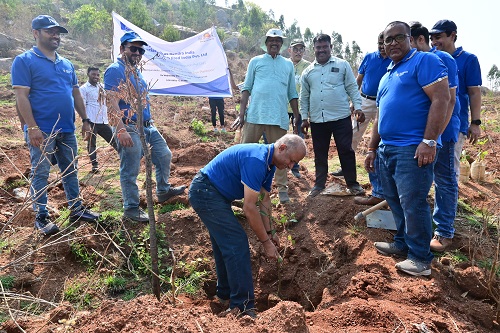
Employees of Dynapac Company actively participated in the plantation drive alongside VVKI volunteers and local residents, turning the initiative into a collaborative environmental effort rather than a one-day event.
The implementation followed a structured process:
-
Site preparation and pit digging
-
Soil enrichment using organic inputs
-
Plantation using appropriate spacing techniques
-
Watering and protection measures
-
Ongoing monitoring and maintenance
Local volunteers and community members also participated in awareness activities focused on environmental protection and long-term stewardship of the saplings.
Environmental Impact
-
Increased green cover
-
Improved biodiversity
-
Better soil moisture retention
-
Reduced soil erosion
-
Enhanced climate resilience
Social Impact
-
Greater awareness around environmental conservation
-
Increased youth and volunteer participation
-
Stronger community ownership of ecological initiatives
Long-Term Economic Benefits
Several of the planted species are fruit-bearing or economically useful, creating future livelihood opportunities for local communities. Species such as Bamboo and Mahua can also contribute to supplementary rural income over time.
Ensuring Long-Term Sustainability
A key focus of the initiative has been post-plantation care and community ownership.
Regular watering schedules, periodic monitoring, organic fertilisation, and local protection mechanisms have been put in place to improve sapling survival rates and healthy growth. Community participation has also helped prevent grazing-related damage and strengthened accountability at the local level.
The project demonstrates how relatively small-scale interventions, when thoughtfully designed and collectively implemented, can contribute meaningfully to environmental restoration.
By planting 1,360 trees across three acres, the initiative has laid the foundation for long-term ecological benefits while reinforcing the importance of collaboration between NGOs, corporates, volunteers, and local communities in addressing climate and environmental challenges.
About the Art of Living Social Projects
The Art of Living’s holistic approach to environmental conservation is transforming crisis into opportunity. Through large-scale afforestation, the restoration of degraded and polluted waterways, and the promotion of natural farming to enhance soil health, its initiatives sustainably revitalise ecosystems, strengthen livelihoods, and influence community practices and policy.
To learn more about these initiatives or explore CSR partnerships, visit: Best NGO for CSR projects in India
Follow: www.instagram.com/artofliving.sp/
Like: www.facebook.com/artoflivingsocialprojects
Post: x.com/artofliving_sp
Message: www.linkedin.com/showcase/artofliving-sp